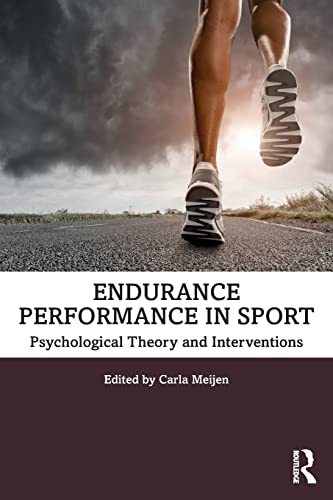
Endurance Performance in Sport : psychological theory and interventions / edited by Carla Meijen.
Material type: TextPublication details: London : Routledge, 2019.Edition: First editionDescription: xiv, 233 pages : illustrations (black and white) ; 24 cmISBN:
 - 9781138053212 (pbk.) :
- 613.71 23
- GV749.5 .E65 2019
| Item type | Current library | Call number | Status | Barcode | |
|---|---|---|---|---|---|
 Lending
|
Causeway Campus | 613.71 (Browse shelf(Opens below)) | Available | 39548000000357 | |
|
Reference
|
Causeway Campus | 613.71 (Browse shelf(Opens below)) | Not for loan | 39548000000358 |
Browsing Causeway Campus shelves Close shelf browser (Hides shelf browser)


Includes bibliographical references and index.
Athletes participating at all levels of endurance performance can relate to the impact of psychological factors. Whether it is motivation, self-belief, feeling nervous before a race, exercise-induced pain, sticking to a pacing strategy, or thoughts around what to focus on, there are a vast number of psychological factors which can affect endurance performance. Bringing together experts in the field from around the world, this book provides a detailed overview of the psychology of endurance performance where there is a research and an applied focus looking at both main theoretical models as well as how interventions can support an athlete's efficacy and well-being. The authors look at regulatory processes around pain, decision-making, self-belief, emotions, and meta-cognition, before examining a range of cognitive strategies, including the use of imagery, goals, self-talk, and mindfulness techniques.
There are no comments on this title.